Knowledge from real-world use.
How-tos, experience reports and technical topics around amateur radio, Linux, networking, security, self-hosting and the projects on DA6IT.de.

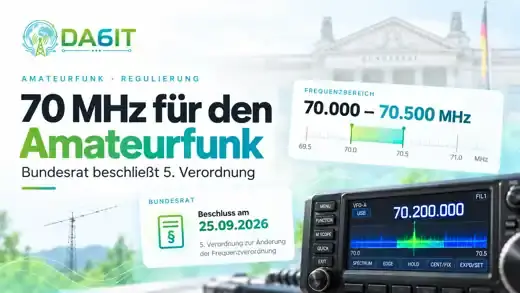
70 MHz for Amateur Radio: What Germany’s Bundesrat Decided on 25 September 2026
Germany’s Bundesrat approved the fifth amendment to the Frequency Ordinance. What 70–70.5 MHz means for radio amateurs and why transmitting is not yet authorised.
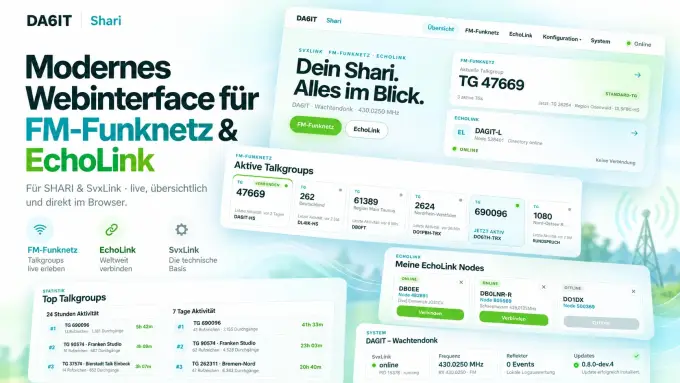
My Modern Web Interface for FM-Funknetz & EchoLink
I built the FM-Funknetz and EchoLink web interface I wanted for my own SHARI: modern, live, responsive and directly in the browser.

Amateur Radio 2026: Numbers, Trends and License Classes
Germany still hosts about 61 000 licensed amateur radio operators, but the new Entry‑Class N is reshaping the community. This article examines the latest statistics, newcomers' interests, and a possible…
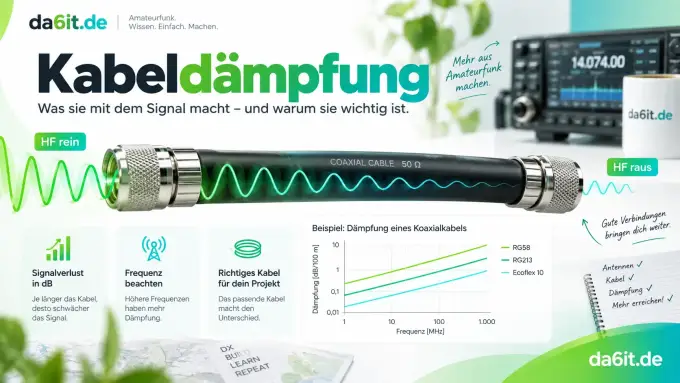
Coaxial Cable Loss in Practice – How the Wrong Cable Eats Your Power
Learn how coaxial cable loss can turn most of your transmitted power into heat, how to calculate it, and which cable is right for your frequency, length, and…
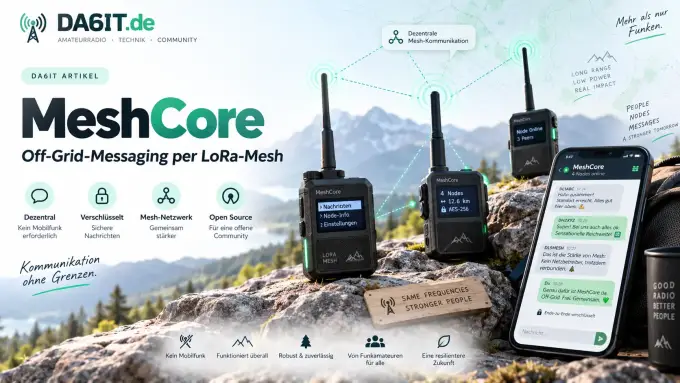
MeshCore – the Decentralized LoRa Mesh for Emergency and Hobby Use
MeshCore is an open, decentralized LoRa‑based mesh that lets you exchange short text messages and GPS data over several kilometres without any Internet, cellular or Wi‑Fi infrastructure.
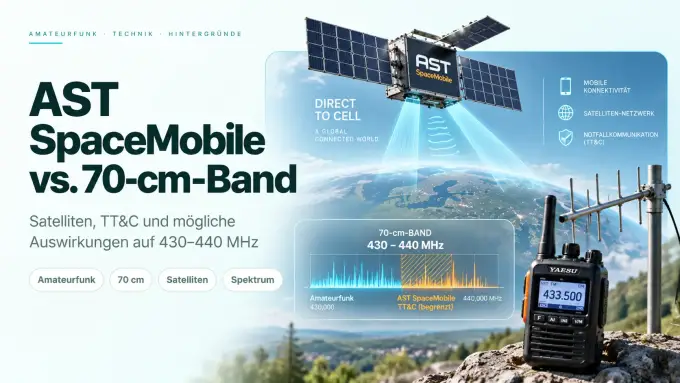
Commercial Assault from Orbit: Is Amateur Radio Losing the 70-cm Band to AST SpaceMobile?
The FCC has approved AST SpaceMobile's permanent use of the 70-cm amateur band for a 248-satellite constellation. This decision poses a significant threat to German amateur radio relays,…
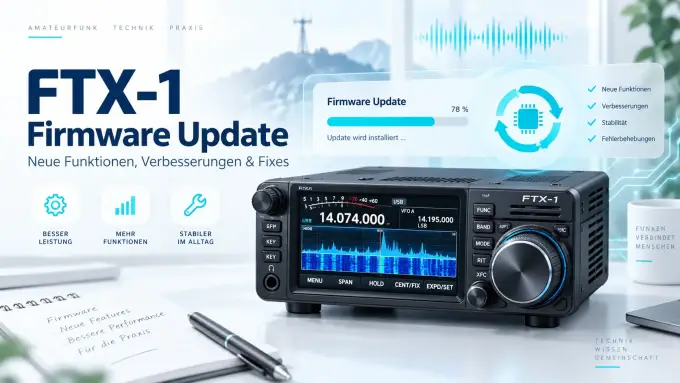
Yaesu FTX‑1 Firmware Update: Step‑by‑Step Guide (including Optima Module)
Learn how to update the firmware of the Yaesu FTX‑1 and its optional Optima (SPA‑1) module, covering required preparations, the flashing process, and the final full reset.
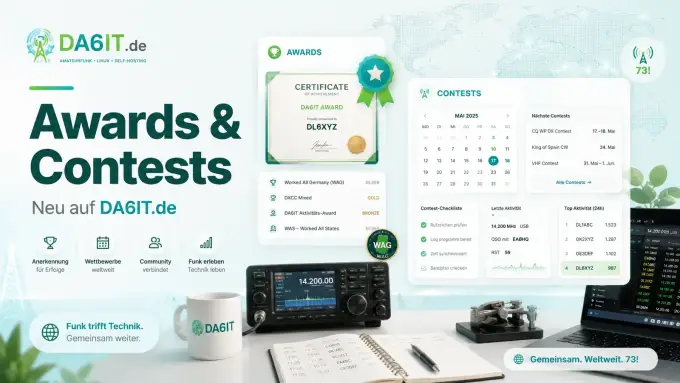
Amateur Radio Contests & Awards – Two New DA6IT.de Overviews
Amateur radio contests are on-air competitions; awards turn QSOs into operating goals. Here is how both work and how the new DA6IT.de overviews can help.
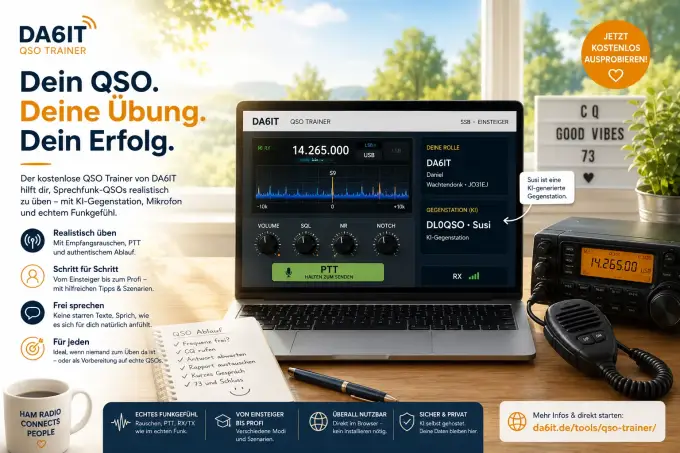
New: DA6IT QSO Trainer – Practise Voice QSOs at Home
Practise SSB voice contacts in the browser with AI radio partner Susi, PTT, receive noise and an approachable path for beginners without live club training.

German Class N: How Difficult Is the Amateur Radio Entry Licence Really?
What you really need to learn for Germany's Class N amateur radio licence, what it lets you do and why the entry exam is more approachable than many…
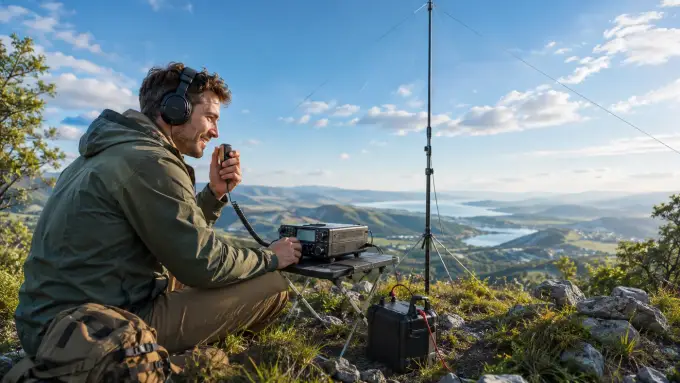
Why Become a Radio Amateur? Because Amateur Radio Is Seriously Exciting
Emergency communication, satellites, worldwide contacts, portable operating, DIY and radio plus software: why amateur radio is far more modern than many expect.
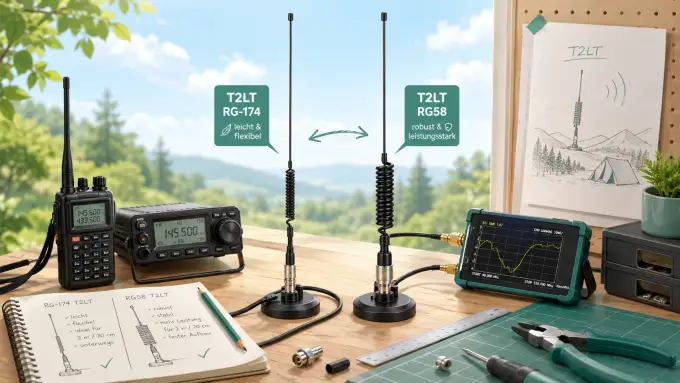
DIY T2LT for 2m & 70cm – RG-174 or RG58?
Two T2LT build guides for 2 metres and 70 centimetres: lightweight RG-174, more robust RG58, dimensions, NanoVNA tuning and comparison.
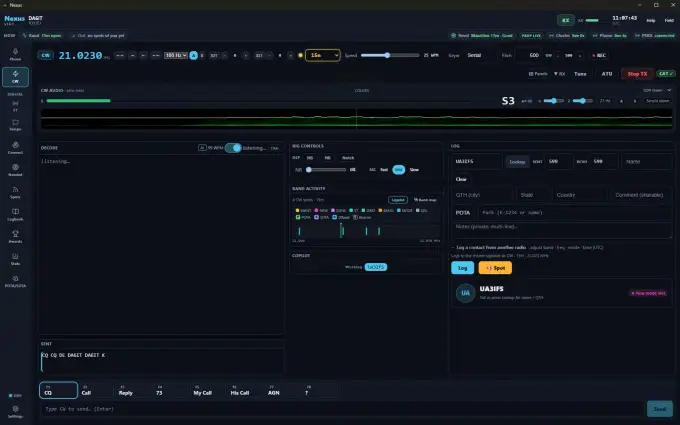
Nexus for CW – Making QSOs Even If You Do Not Know Morse Yet
My hands-on Nexus test with the Yaesu FTX-1: serial keying, CW decoding, macros and a complete QSO workflow from CQ to 73.
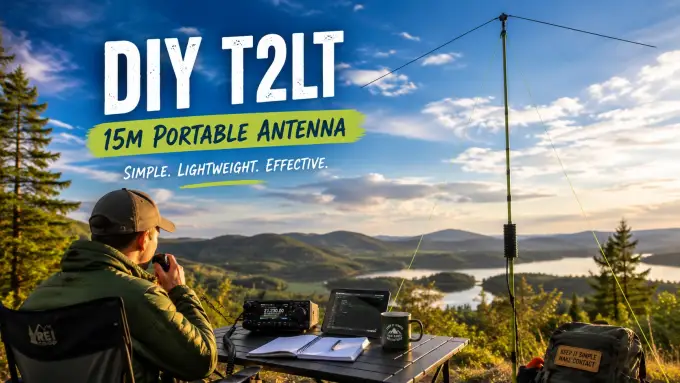
DIY T2LT for 15 Metres – A Cheap Portable Antenna I Built Myself
My DIY T2LT for 15 metres: an inexpensive self-build made from RG58, a choke coil and a fibreglass mast, with surprisingly strong performance in portable use.
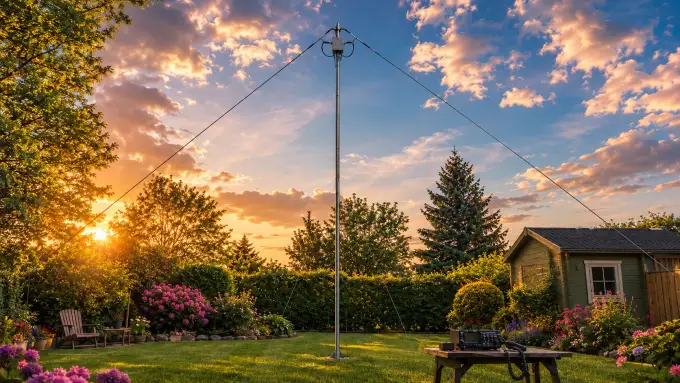
Kelemen Multiband Dipole as an Inverted-V – Installation, SWR and My Experience
My Kelemen multiband dipole as an inverted-V in a small garden: 13 m mast, two 11 m legs, SWR, NanoVNA measurements, 80m tuning and practical improvements.
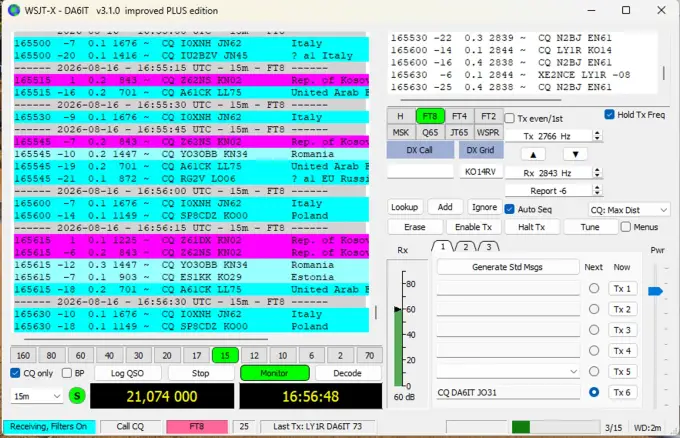
FT8 and FT4 with WSJT-X – My Setup and the Settings That Work for Me
A practical FT8 and FT4 setup guide with WSJT-X: CAT, USB audio, ALC, waterfall handling, Hold Tx Freq, PSK Reporter and automatic logging to the DA6IT.de Wavelog Offline…
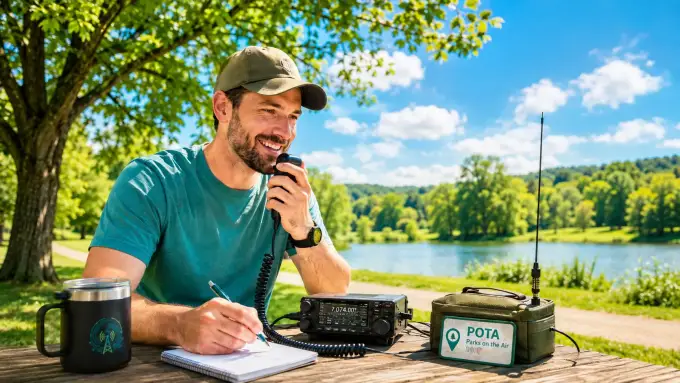
What Is POTA – and How Does It Work?
A practical beginner guide to Parks on the Air: Hunters, Activators, simple portable equipment, park selection, spotting, logging and the first activation.
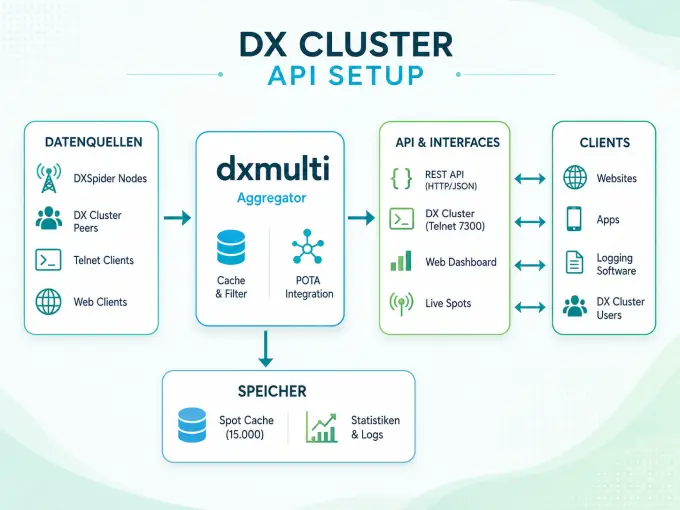
DX Cluster API Setup – Architecture, Data Flow and Structure
A practical look at my DX Cluster API setup: data sources, aggregator, REST interfaces, Telnet, dashboard and the complete data flow behind it.